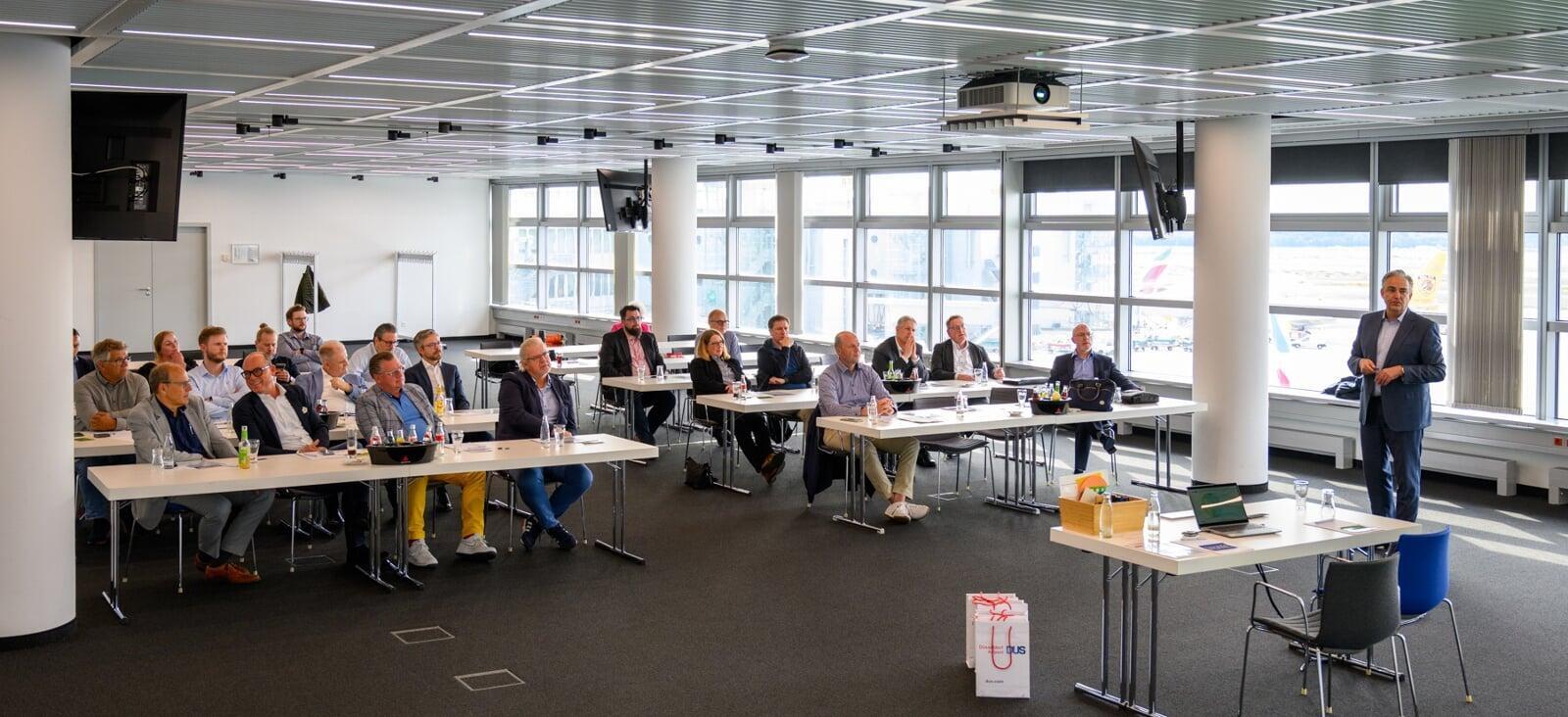
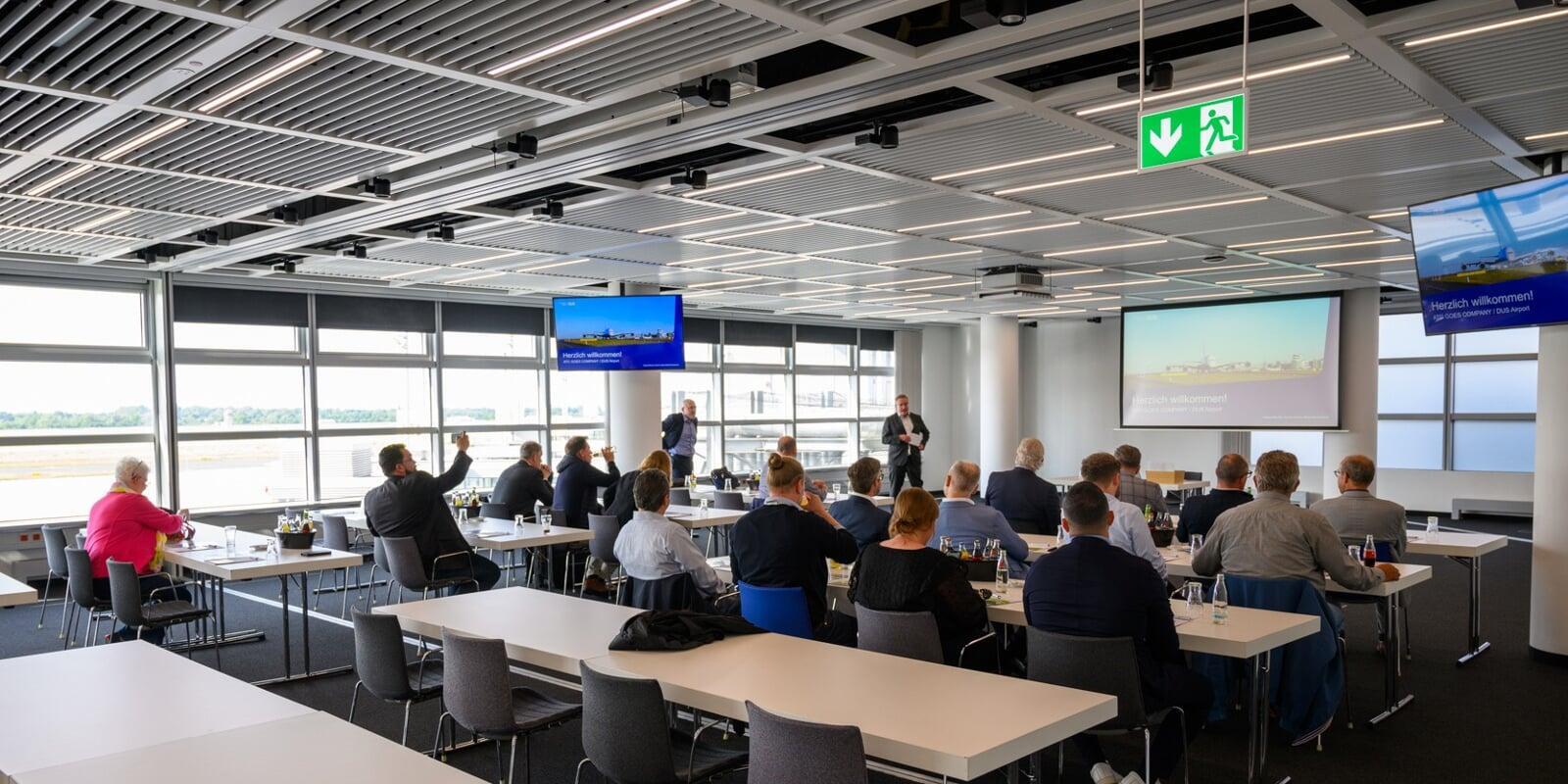
On 22.05.2024, a special members' meeting took place at the invitation of Düsseldorf Airport as part of the After Trade Club (ATC Goes Company). Foreign traders naturally travel a lot on business trips to open up sales and procurement markets all over the world.
Alexander Dürkopp, Head of R&D at Hebmueller GROUP, took part in this meeting.
In his introductory speech, Mr. Mischke, Director Aviation Market Development (DUS Airport), discussed the current situation at Düsseldorf Airport. Following the end of the coronavirus pandemic, the number of flights at Düsseldorf Airport is increasing significantly again. Nevertheless, the 2019 level has not yet been reached again. This is primarily due to the fact that demand in domestic German traffic has fallen significantly and numerous intercontinental routes are not yet being offered again. In order to be able to respond to rising demand, frequencies to major European cities are being gradually increased again. A positive aspect is the fulfillment of the service promise. Compared to the previous year, many improvements have been made to check-in processes, security checks and baggage transit times.
The flight schedule currently comprises 75 airlines and 170 destinations, not only within Europe. There are currently no direct flights, e.g. to Japan or the USA. The reasons for this include unfavorable framework conditions and the associated structural changes. However, the expansion of intercontinental connections is high on the agenda. Flight connections to feeder airports, such as Dubai, Doha or Istanbul, in order to be able to fly on to Asia or Africa from there, are therefore still in high demand.
Air traffic remains a driver of growth and prosperity worldwide. The number of airports under construction is increasing worldwide. Based on passenger figures for 2023, Düsseldorf is in fourth place with 19.1 million passengers after Frankfurt am Main, Munich and Berlin Brandenburg. However, high government costs and the associated regulation are particularly detrimental to German air traffic and reduce international competitiveness, especially within Europe.
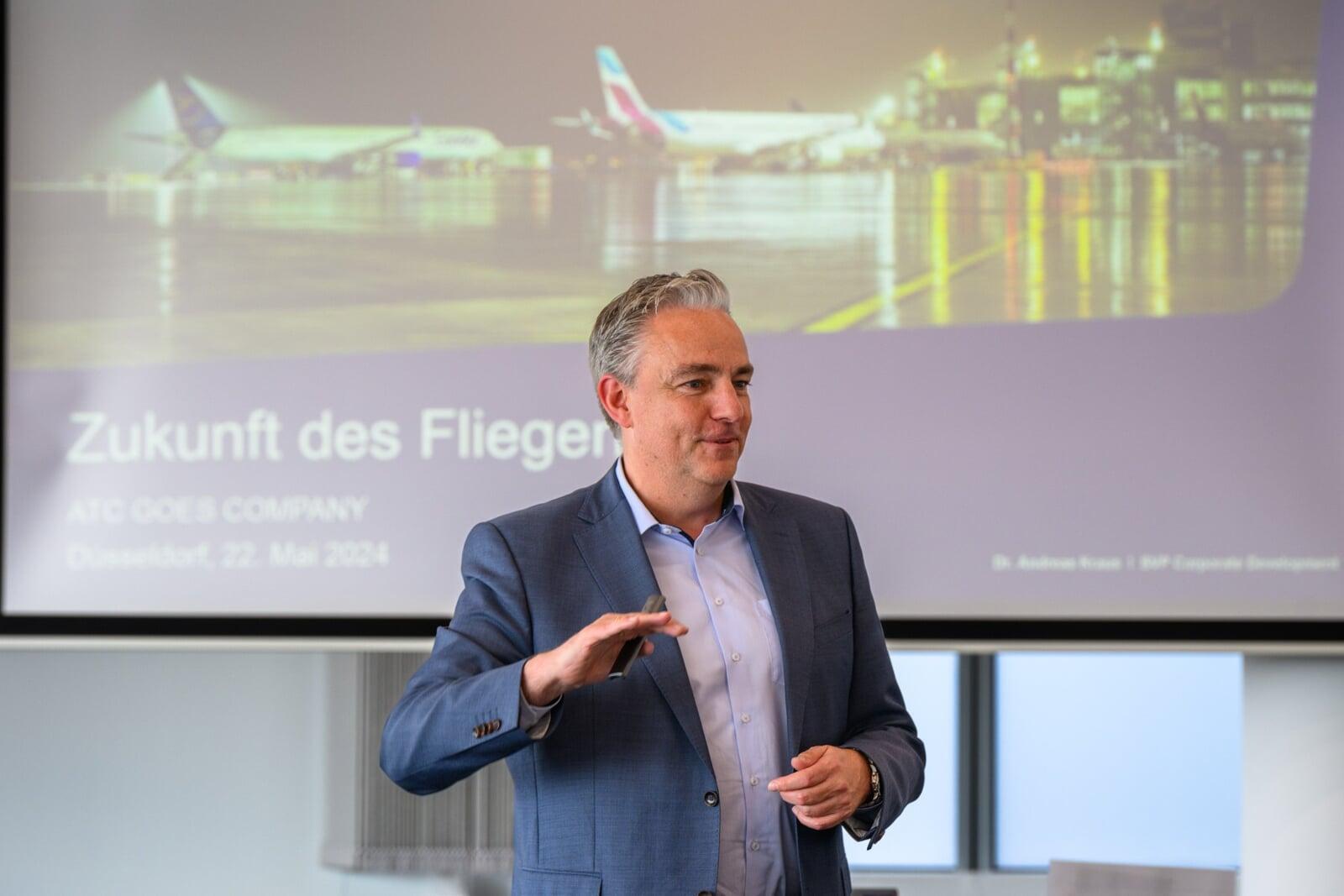
Dr. Kraus, SVP Corporate Development, DUS Airport, then gave a detailed insight into technological developments against the backdrop of the European Commission's Green Deal and the associated challenges in his presentation on “The future of flying”. Based on figures from 2018, air traffic only accounts for 3.01% of global CO2 emissions. The “climate neutrality” target is binding for EU aviation. By 2030, a reduction in net CO2 emissions of at least 55% compared to 1990 is planned. By 2050, EU aviation should be climate-neutral.
In terms of implementation, Düsseldorf Airport is well on the way to successfully contributing its share to climate-neutral flying.
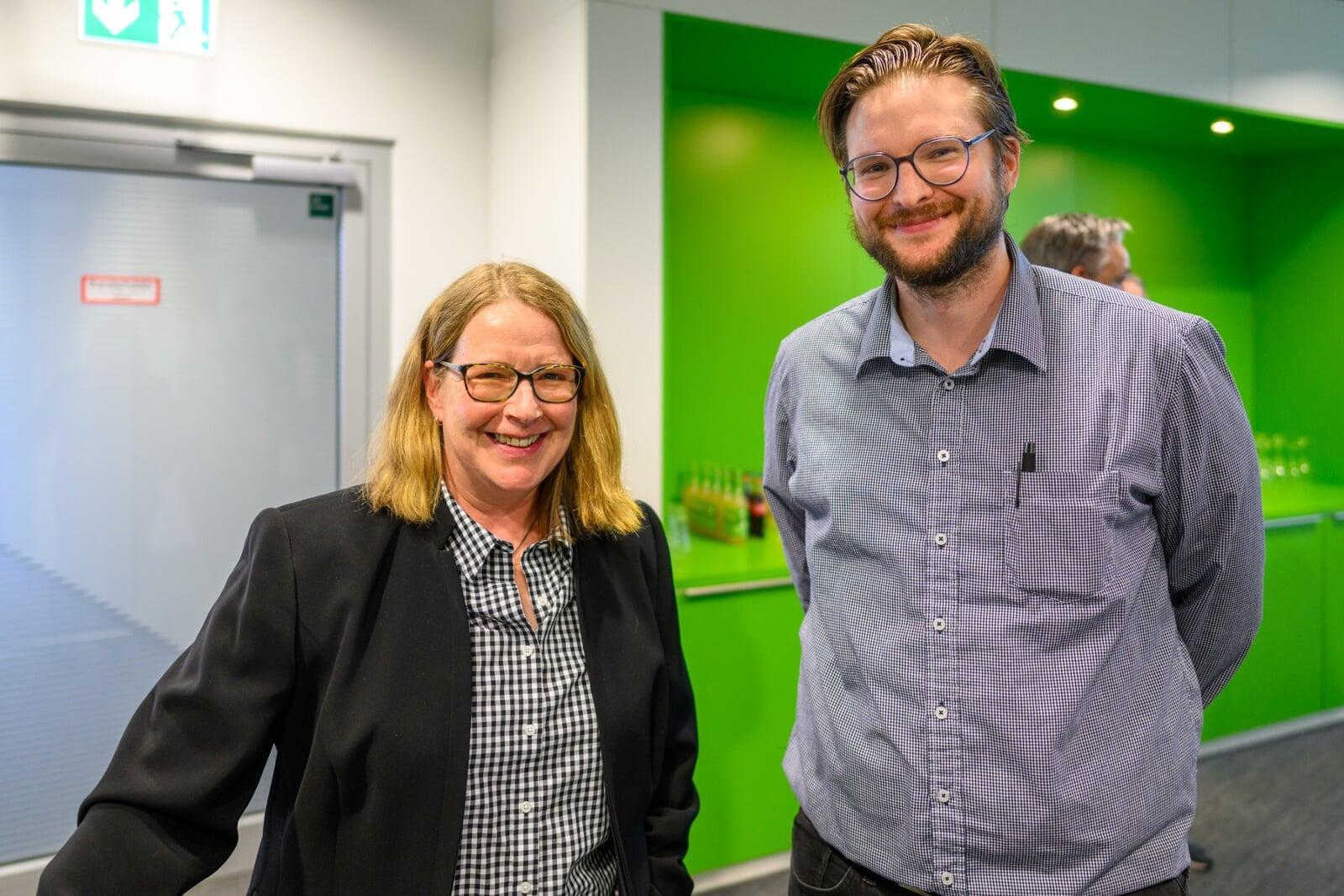
During the subsequent get-together, certain aspects of the presentations were then discussed in greater depth. New contacts were made and existing ones cultivated, especially as some of the guests had not seen each other for a long time. The ATC Goes Company gave the foreign traders, united in the North Rhine-Westphalia Foreign Trade Association (AHV NRW e. V.), a perfect insight behind the scenes of the commercial enterprise, DUS Airport.